Document to understand
Archaeological drawing
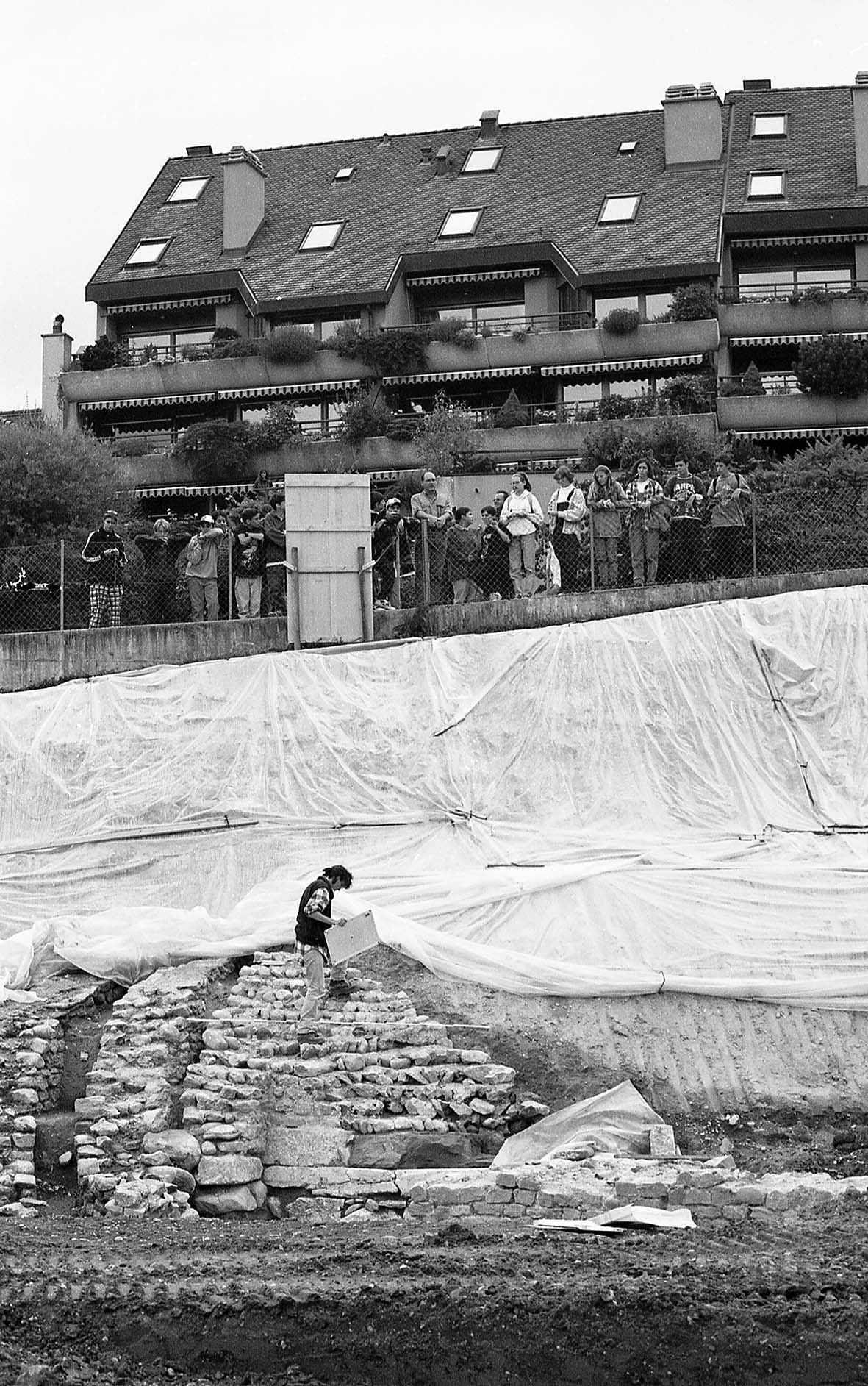
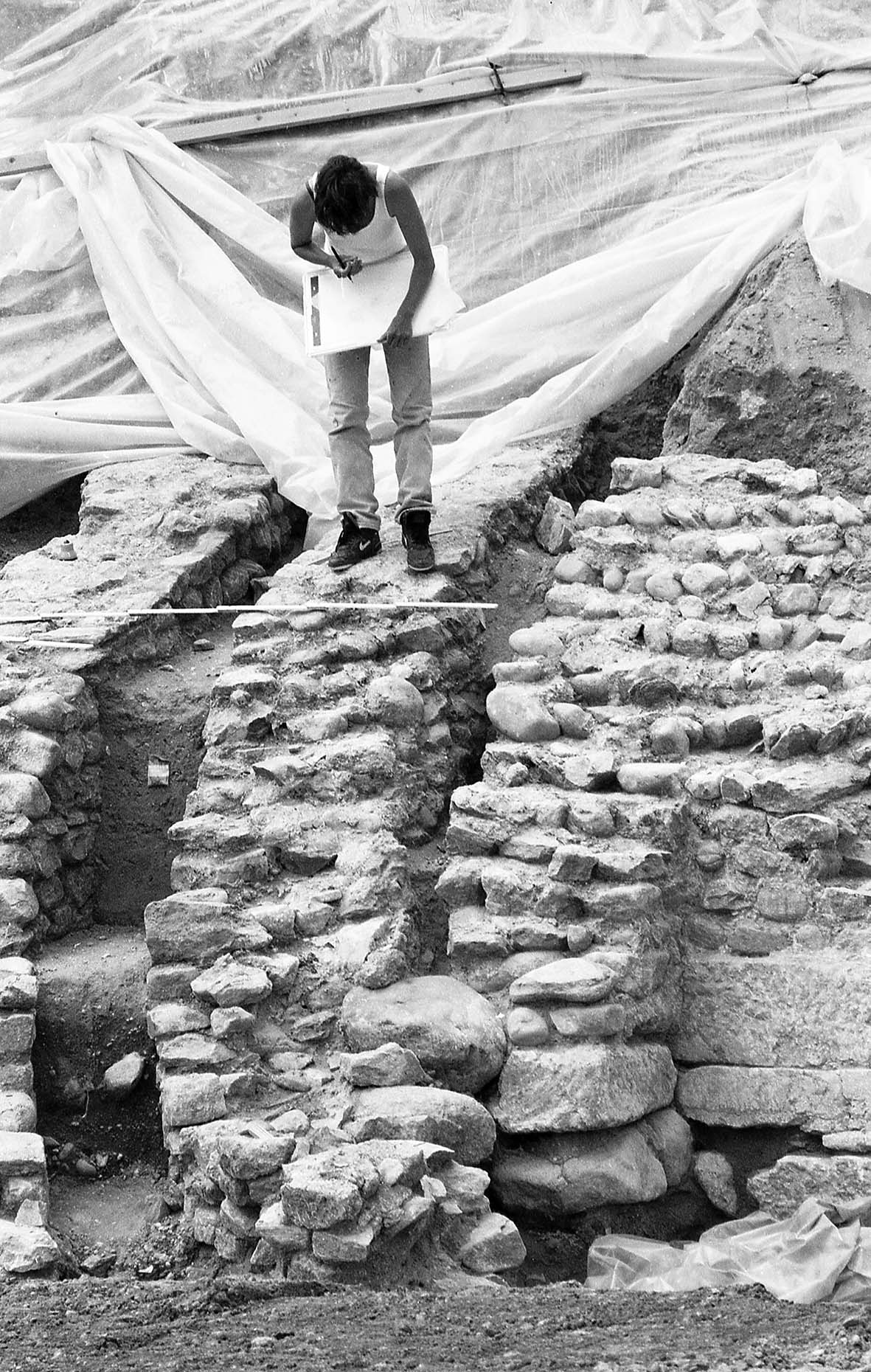
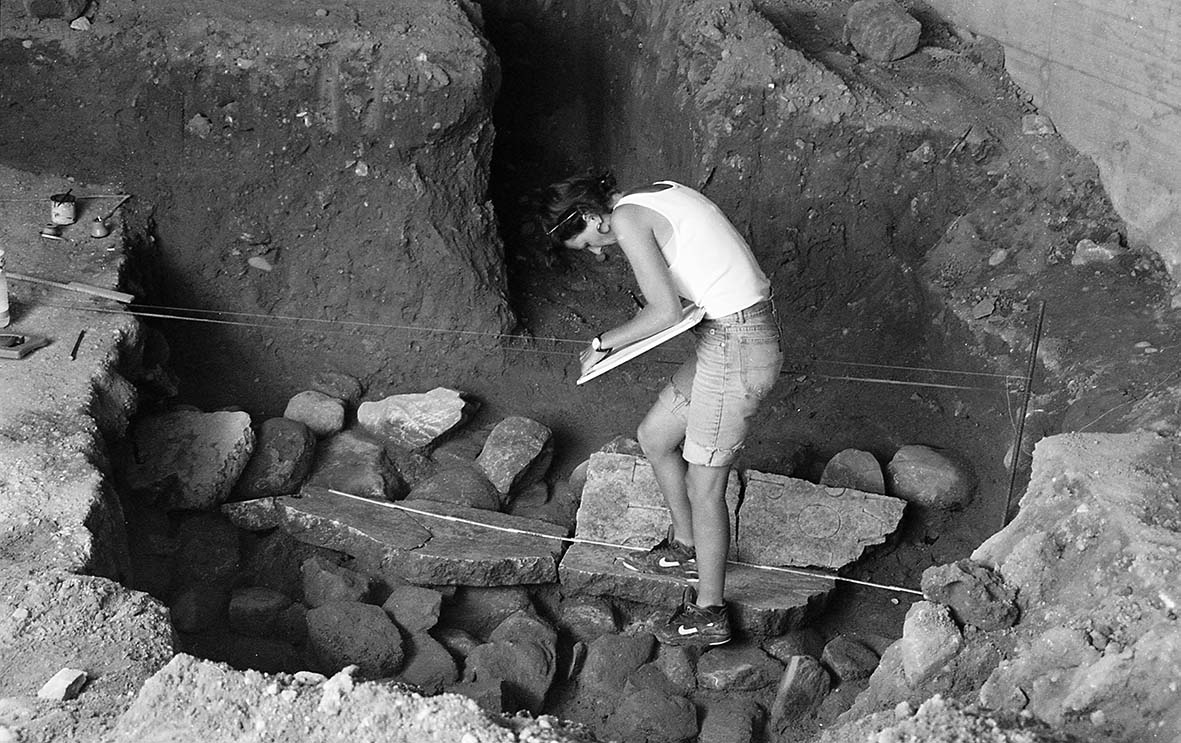
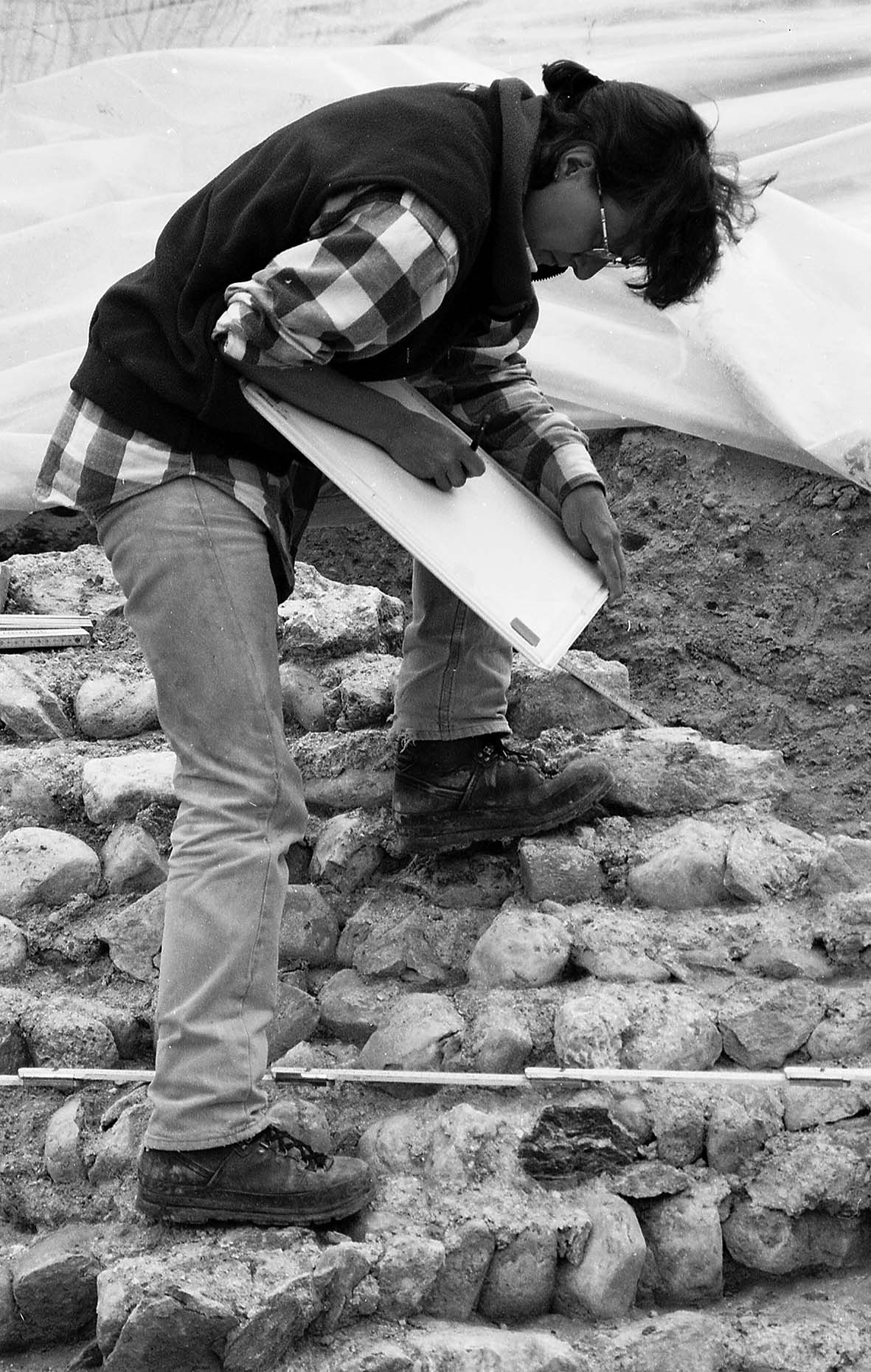
The arena of the Nyon amphitheatre is surrounded by the podium wall. This consists of a masonry base of stone and lime mortar, covered with a facing of limestone blocks. To document the location of the blocks and the details of the walls, it was necessary to resort to drawing.
Archaeological drawing is much more than a simple sketch. It is an essential scientific tool for documenting and understanding the objects and structures discovered during excavations. Thanks to the precision and rigor of drawing, archaeologists are able to record the exact position of each vestige.
Drawings provide as much, if not more, information than photographs. Both techniques are important to combine for the analysis of the remains, which largely takes place once the excavation campaign is over.
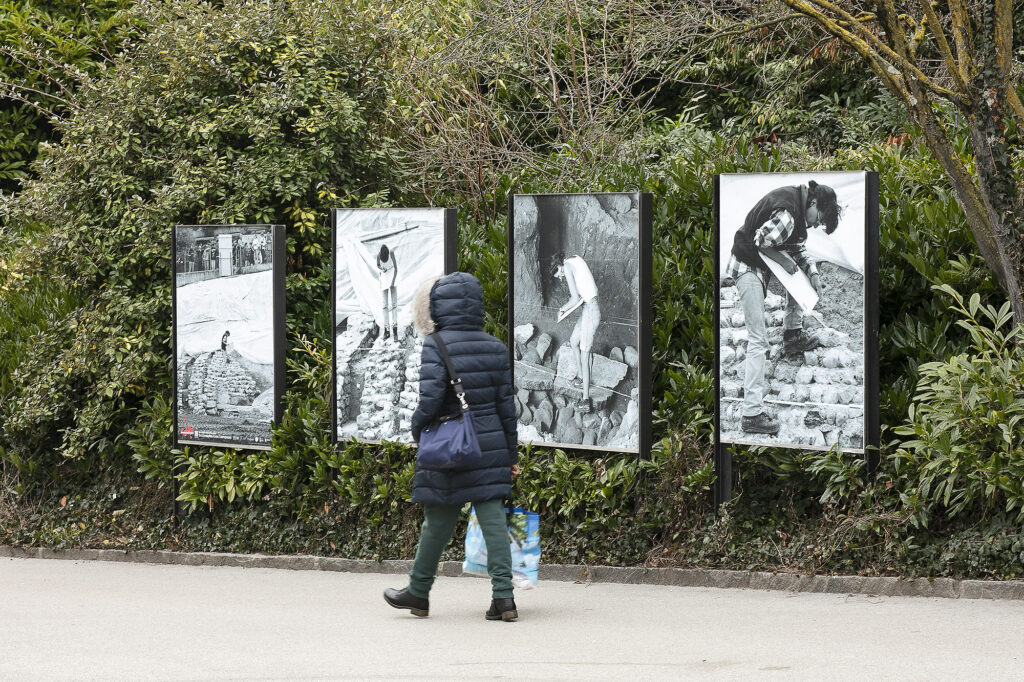
The amphitheatre on display
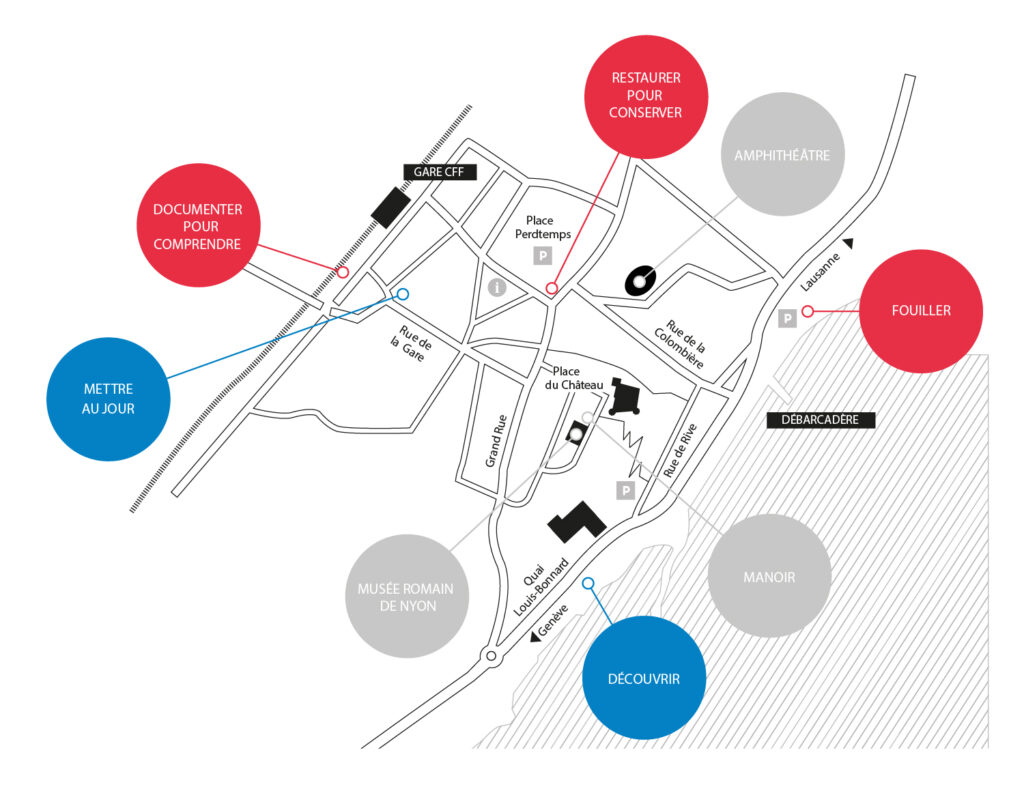
The Roman Museum of Nyon’s exhibition L’Amphithéâtre s’affiche will be on display in the town of Nyon from November 10, 2024 to January 21, 2025. It highlights the work of archaeologists through photographs taken during excavations of the amphitheatre in 1996.
Amphitheatre?
For more information on the amphitheatre, its past and its future, discover the temporary exhibition at the Roman Museum of Nyon Amphitheatre? from May 31, 2024 to January 11, 2026.
Partners



Support